







Environmental Clean and Disinfect with SoChlor DST – Procedure Training
GV. Life. Protected.
SoChlor DST.
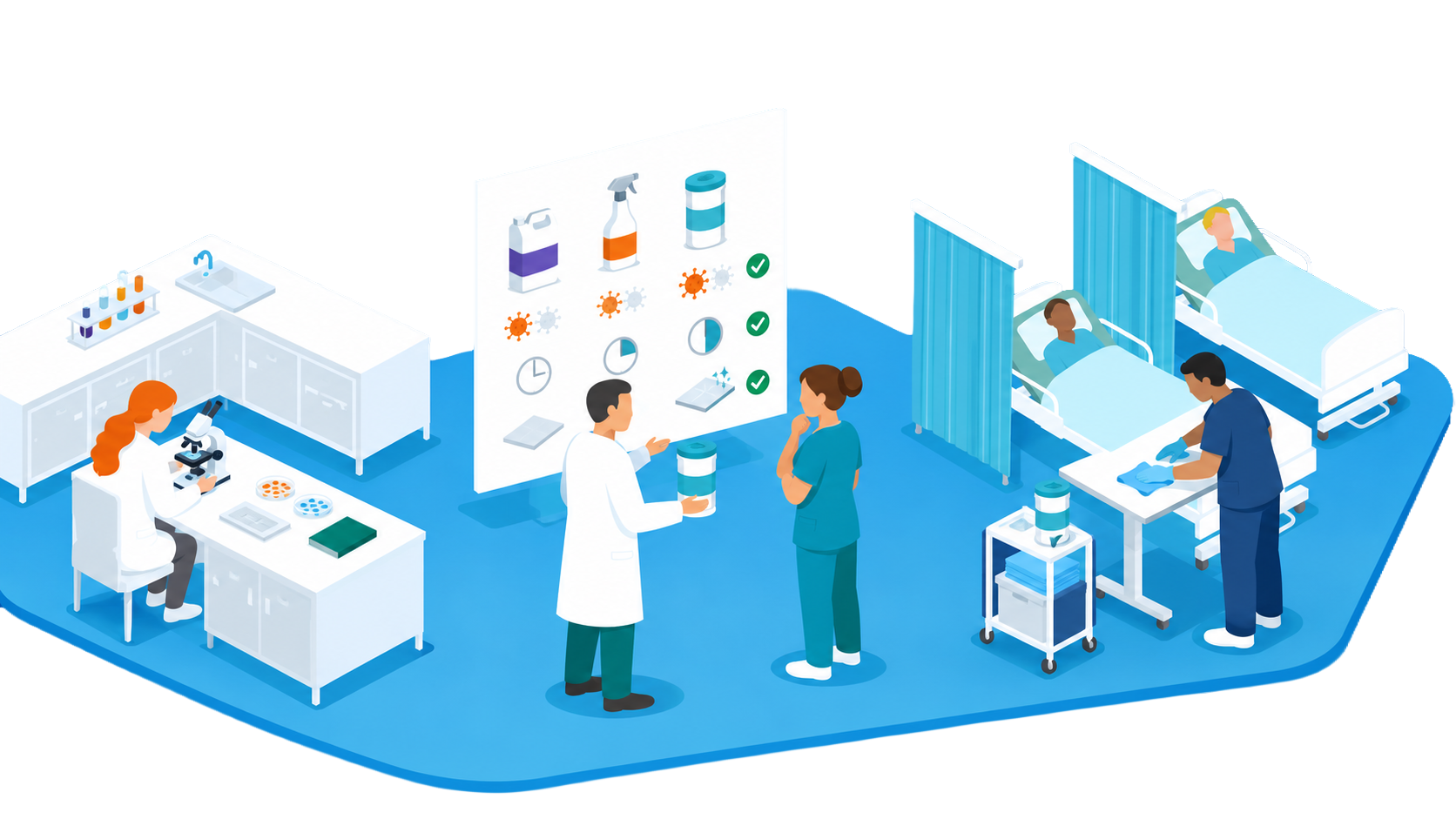
SoChlor DST is a dual action, clean and disinfect solution for all aspects of surface and environmental disinfection.
It combines a chlorine compatible detergent with NaDCC in a single tablet format, offering excellent cleaning and disinfection performance in one easy step.
It is worth noting the difference between cleaning and disinfection.
Cleaning is the removal of dirt, grease, surface load and some microorganisms, but does not kill microorganisms.
Disinfection is the destruction of microorganisms that are harmful to us, but disinfectants do not necessarily clean.
Before SoChlor DST, disinfection of the environment consisted of a 3 stage process.
First, cleaning the surfaces with detergent and water.
Second, then rinsing away all detergent residues which would inactivate the disinfectant.
Then thirdly, cover the entire area again with the disinfectant.
This was both time-consuming and susceptible to user error that meant it was rarely done properly.This was both time-consuming and susceptible to user error that meant it was rarely done properly.
SoChlor DST‘s dual action ‘clean and disinfect’ makes this a single step, saving time and ensuring dramatically better implementation and efficacy.
SoChlor DST follows guidelines set out by the Health and Safety Executive , UK Department of Health , World Health Organization and CDC for effective disinfection and decontamination of healthcare environments.
Certified with Certified EN Efficacy testing, SoChlor DST is fully effective against, Bacteria, Spores, Mycobacteria, Fungi and Viruses including corona viruses such as COVID-19.
For more information on efficacy and testing, please visit www.gvhealth.com.
Benefits over other products in the market.
Dual action, clean and disinfect.
Fast contact times.
Proven effectiveness on hard surface biofilms.
Safe and easy to use.
High material compatibility.
As well as healthcare settings.
SoChlor DST can be used to deep clean public health and domestic settings.
Using SoChlor DST is safe and easy.
Put on apron and gloves.
Like others, so claw products SoChlor DST can be used in a range of concentrations depending on use.
For general environmental disinfection in healthcare, 1000 PPM is recommended.
You should only go above 1000 PPM if instructed to do so by your infection control supervisor.
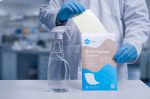
Fill diluter with cold tap water to the fill line.
Add 1 tablet per 1 litre of cold tap water to create a 1000 PPM solution.
Tablets should dissolve in two to three minutes.
To aid dilution. Place lid on the diluter.
Do not tighten, and gently swirl the diluter until fully dissolved. Do not shake.
Once fully dissolved, tighten the lid and gently invert the diluter twice to ensure the solution is mixed.
The SoChlor DST diluters have a recording section found on the back.
Fill in the details with non-permanent marker. Solution should only be kept for 24 hours. Then a fresh solution should be made. Avoid leaving solution in areas where patients or children could access it.
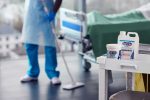
SoChlor DST can be applied with a cloth for wiping a surface and mop for floors.
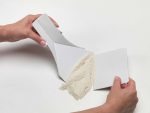
To further mitigate cross-contamination risk, it is recommended clothes are folded in 4 during prep for soaking, creating 8 separate surfaces per cloth for the application process.
Cloths should also be color-coded depending on area type.
This will be determined by local regulation or by your infection control supervisor.
Areas should be approached systematically working downwards in the room environment from high to low.
And working from clean areas to dirty.
Wiping walls downwards.
For surfaces such as mattress covers and table tops, use s-shape motion.
For bed and other furniture frames wipe from clean to dirty in one direction.
These methods are key to ensure full disinfection of all items while preventing accidental spread of organisms or cross-contamination.
To ensure sufficient contact time, surfaces should be moist but not wet.
SoChlor DST can be used on stainless steel, chrome, enamel frames such as commodes and bed frames.
Mattress covers, sealed wood or flooring surfaces. For mopping use ‘S’ or figure-8 motion to ensure sufficient contact time.
Floors should be moist but not wet.
After 24 hours, dispose of remaining solution down sluice or sink with running water.
Be careful not to contaminate handles with gloves.
Rinse diluter for reuse.
Remove gloves first.
Pinch one glove at the wrist without touching the skin of the forearm and peel away from the hand, turning the glove inside out.
Hold the removed glove in the gloved hand.
Hook the index and middle finger of the bare hand inside the remaining glove.
Taking care not to touch the outside of the glove.
Pull off the glove, turning it inside out with the first glove inside.
Dispose in clinical or appropriate waste channel depending on local regulations.
To remove apron, break the neck loop and waist straps.
Avoid touching the outer surface of the apron with your hands.
Roll the apron downwards from your chest so the contaminated outer surface is folded inwards.
Dispose in clinical or appropriate waste channel depending on local regulations.
Wash hands thoroughly.
For more information or support, please visit www.gvhealth.com.
GV. Life. Protected.