











SoChlor (hypochlorous acid) vs peracetic acid generating products
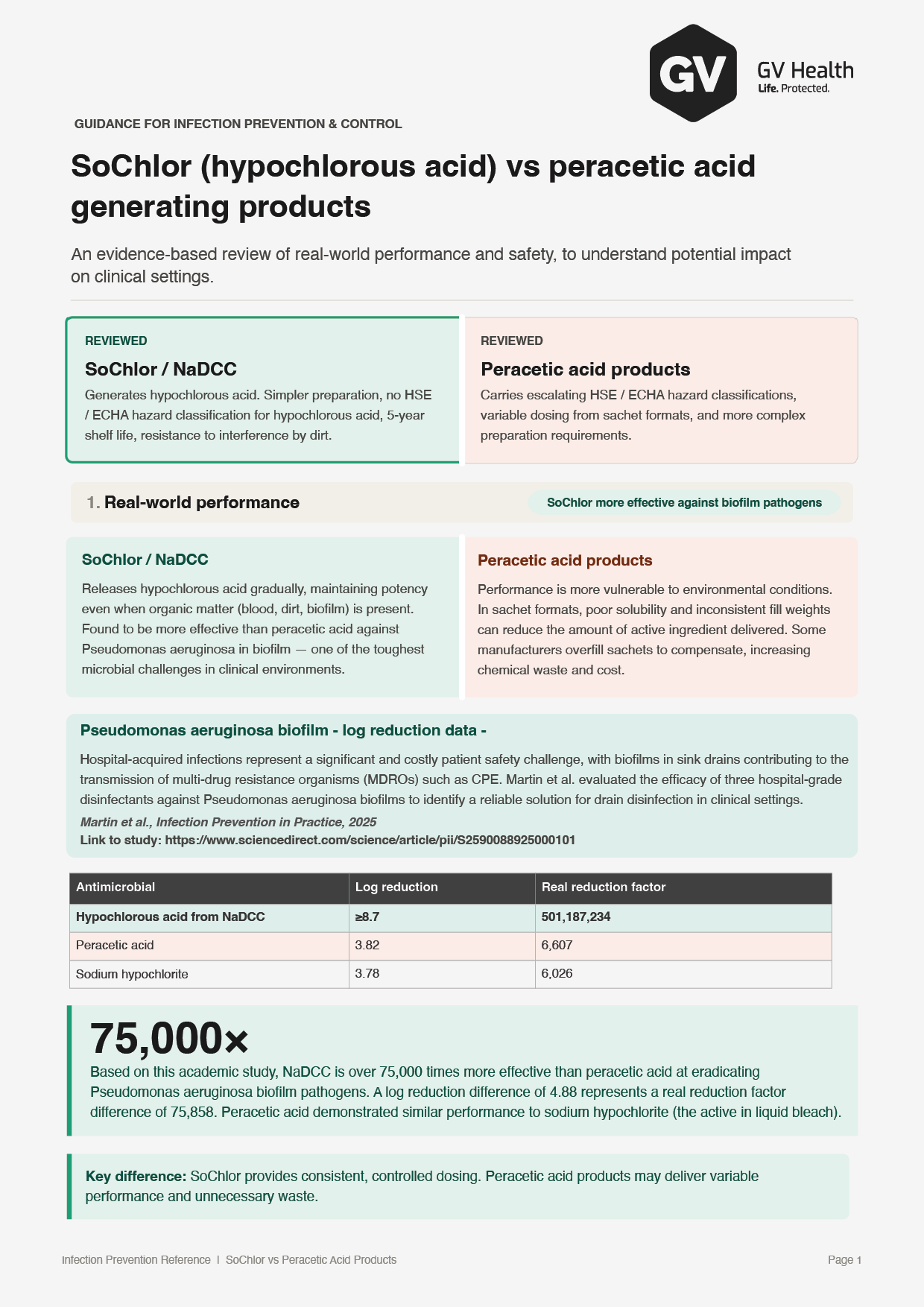
Peracetic acid generating disinfectants are being promoted heavily across healthcare settings for infection prevention and control (IPC), but their performance, safety and practicality warrant careful scrutiny. Emerging evidence indicates that NaDCC-based disinfectants such as SoChlor (NaDCC/hypochlorous acid) demonstrate significant improvements over peracetic acid products across antimicrobial efficacy, safety, and ease of use.
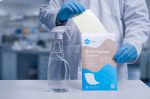
Peer-reviewed evidence confirms NaDCC is over 75,000 times more effective against Pseudomonas aeruginosa biofilm. GV Health’s lab studies have proven that unlike peracetic acid products, SoChlor can quickly and fully dissolve in water without the need for temperature, doesn’t leave residues and it’s active (hypochlorous acid) has no hazards.
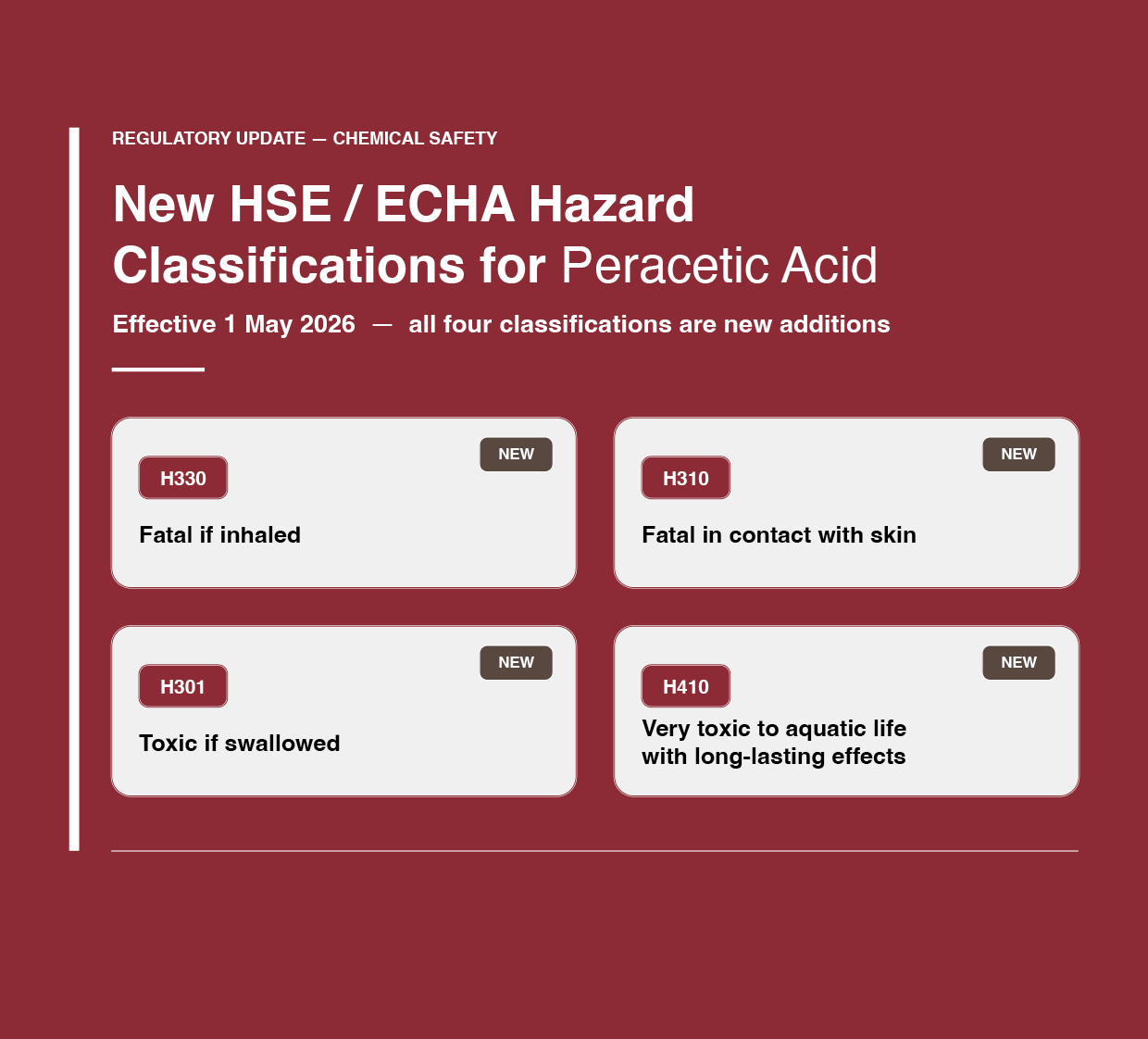
By contrast, peracetic acid has escalating regulatory hazards effective from May 2026, including fatal inhalation and skin contact warnings, with published research documenting respiratory and eye symptoms in exposed hospital staff. SoChlor’s cold-water preparation, five-year shelf life, and up to threefold reduction in chemical usage by weight further strengthen the case for its adoption as the preferred disinfectant in the NHS and healthcare IPC. If you’re interested in moving away from peracetic acid products to improve IPC outcomes for patients and staff, please contact info@gvhealth.com to learn more about SoChlor, a peracetic acid free solution to disinfection.